Animation has always been a balance between imagination and execution. For decades, turning an idea into moving images required time, teams, and painstaking manual effort. Today, that balance is shifting.
We are entering the Intelligent Animation Era a phase where Artificial Intelligence (AI) is no longer a side experiment or a novelty tool, but a core force shaping how visual stories are imagined, built, and delivered.
From concept art to final rendering, AI is redefining every stage of animation production. Not by replacing artists, but by removing friction, compressing timelines, and opening creative doors that were previously locked behind cost and complexity.
This transformation is not theoretical. It is already happening across animation studios, production houses, and independent creators worldwide.
Animation’s Turning Point: From Manual Craft to Intelligent Systems
Traditional animation has always been labor-intensive. Frame-by-frame workflows, complex rigging, slow rendering cycles, and repetitive refinements defined the craft for years. While this process produced beautiful results, it also limited scale, speed, and accessibility.
AI changes that equation.
What once took weeks can now take days.
What once required large teams can now be done by smaller, smarter ones.
What once constrained creativity now expands it.
This is not the end of animation craftsmanship. It is the evolution of it.
Releasing Imagination: AI in Concept Art
Every animated project begins with imagination. Concept art sets the tone, style, and emotional direction of a story. Traditionally, this phase required long brainstorming cycles, reference hunting, and multiple design iterations.
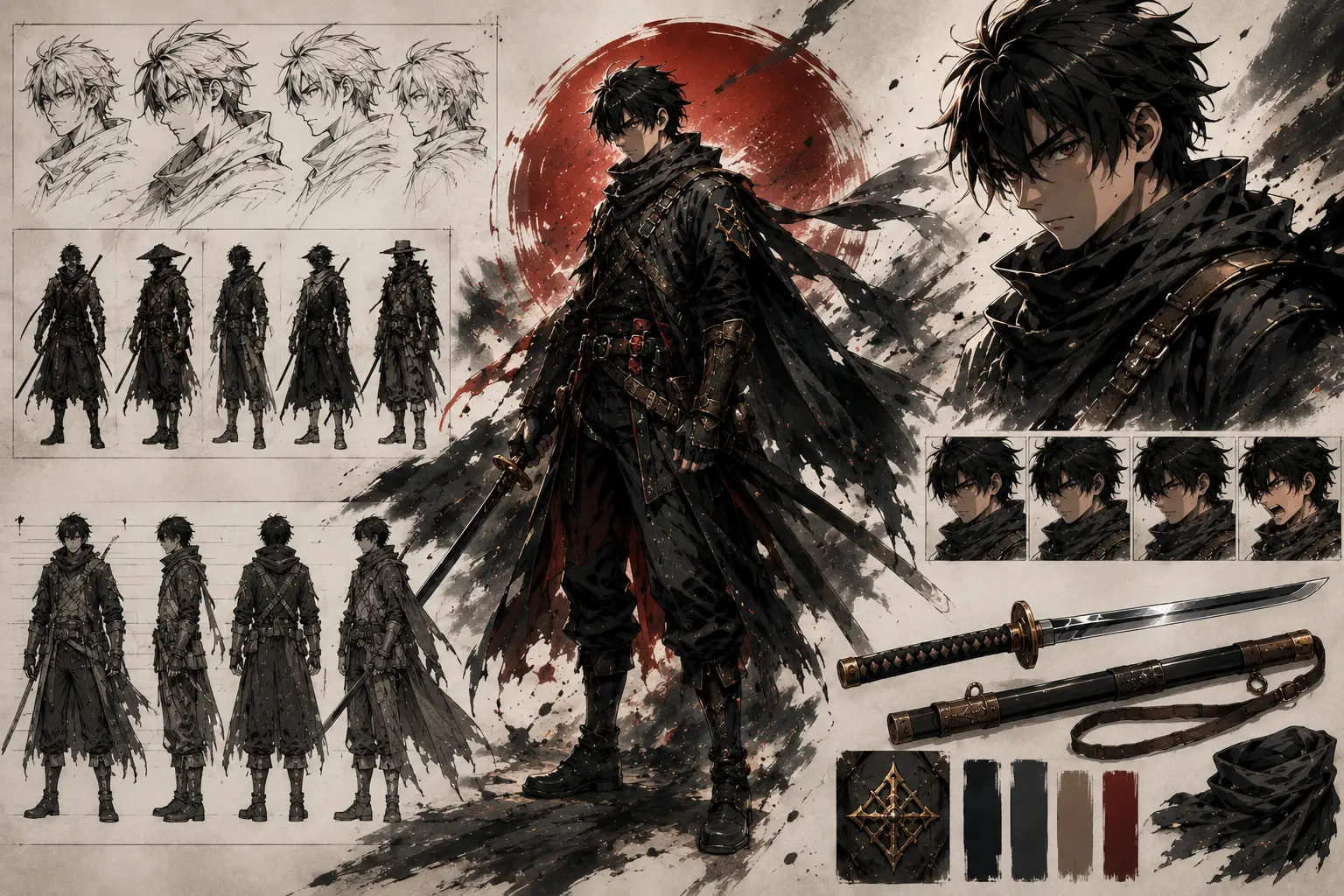
AI tools like Midjourney and DALL·E 2 have dramatically reshaped this stage.
With simple text prompts, animators and designers can now generate:
- Visual styles
- Character concepts
- Environments
- Mood explorations
This does not replace the artist’s vision. Instead, it accelerates exploration.
For animation production studios, this means:
- Faster ideation
- Broader creative exploration
- Reduced pre-production bottlenecks
AI becomes a creative catalyst, allowing teams to test more ideas early, discard weak directions quickly, and refine strong ones with greater confidence.
Bringing Characters to Life: AI in Character Development
Characters are the soul of animation. Their movement, expressions, and emotional nuance determine whether an audience connects or disconnects.
AI is transforming character animation by analyzing vast datasets of:
- Human motion
- Facial expressions
- Muscle behavior
- Speech patterns
This enables:
- More natural body movement
- Realistic facial animation
- Emotionally accurate performances
Tasks that once required hours of manual tweaking such as lip-syncing or micro-expressions can now be handled intelligently by AI systems, allowing animators to focus on performance quality, not technical cleanup.
For any animation production house striving for excellence, this level of detail is no longer optional. It’s becoming the new baseline.
Streamlining the Process: AI in Animation Production
Production is where animation traditionally slows down. Rigging, cleanup, in-betweening, and refinement consume enormous time and resources.
AI is reshaping this stage by automating repetitive tasks:
- Character rigging
- Motion cleanup
- Frame interpolation
- Asset refinement
Tools like DeepMotion and RADiCAL allow realistic motion capture without expensive suits or studios. Simple video footage can now drive believable 3D animation.
For animation studios in India and globally, this creates a massive advantage:
- Shorter delivery timelines
- Reduced production costs
- Higher output quality with leaner teams
Efficiency is no longer just about speed. It’s about creative sustainability.
Faster, Better, Brighter: AI in Rendering and VFX
Rendering has always been a bottleneck. Complex lighting, detailed textures, and heavy simulations slow production and inflate costs.
AI-driven rendering and VFX tools are changing that.
By learning how light, texture, and motion behave, AI can:
- Optimize render paths
- Reduce noise faster
- Enhance visual realism
- Generate complex effects with fewer resources
This allows animation production houses to push visual boundaries without pushing deadlines beyond reason.
The result?
More cinematic quality.
More ambitious visuals.
Less compromise.
The Creative Upside: Opportunities AI Unlocks
The integration of AI into animation is not just about efficiency. It’s about creative expansion.
Unleashing Creativity
When technical burdens are reduced, artists are free to:
- Experiment with new styles
- Explore unconventional narratives
- Refine emotional storytelling
AI handles the heavy lifting. Humans guide the vision.
Increased Efficiency
Faster workflows mean:
- More iterations
- Better polish
- Consistent quality
Studios gain a competitive edge without burning out teams.
Elevating the Art of Animation
AI enables:
- Greater realism
- Stronger emotional resonance
- Higher production value across the board
For top animation production studios, this aligns perfectly with the pursuit of excellence.
The Other Side: Challenges That Must Be Addressed
With opportunity comes responsibility.
Balancing Human Creativity and Technology
AI should assist not dictate creative decisions. Animation is still a human art form rooted in emotion, culture, and storytelling.
Preserving artistic integrity requires:
- Clear creative direction
- Human oversight
- Intentional tool usage
Ethical Considerations
AI systems can inherit biases from their training data. Responsible use requires:
- Transparency
- Cultural sensitivity
- Ethical production standards
Ignoring these concerns risks harming both creators and audiences.
AI and Accessibility: Democratizing Animation
One of the most powerful impacts of AI is accessibility.
User-friendly AI platforms are lowering barriers:
- Smaller studios can compete globally
- Independent creators can produce studio-quality work
- Diverse voices can enter the animation space
Animation is no longer limited by geography, infrastructure, or capital alone.
This democratization fuels innovation.
Empowering the Next Generation of Animators at Incredimate
As AI continues to reshape the animation industry, one truth remains clear: the future depends on people, not just technology. At Incredimate, we see AI not as a replacement for creativity, but as a powerful enabler that helps artists focus on storytelling, emotion, and originality.
Our approach goes beyond tools and software. We believe in building human potential alongside intelligent systems—creating an environment where animators, designers, and storytellers can grow with confidence in a rapidly evolving creative landscape.
At Incredimate, we are committed to:
- Developing future-ready animation workflows that combine AI efficiency with human creativity
- Supporting skill growth and creative learning across animation, VFX, and visual storytelling
- Encouraging inclusive access to creative opportunities, where talent matters more than background or limitations
By reducing technical barriers and embracing intelligent workflows, we help creators focus on what truly matters—ideas, performance, and meaningful visual stories.
For us, innovation is not just about adopting new technology. It’s about empowering the next generation of animators to imagine freely, create responsibly, and compete confidently on a global stage.rs, Incredimate is building an ecosystem where imagination not circumstance defines success.
The Bigger Picture: An Inclusive Animated Future
AI is not replacing animators. It is changing what animators do.
Manual repetition is giving way to:
- Creative supervision
- Performance direction
- Visual storytelling leadership
With initiatives like Incredimate, this transition becomes inclusive rather than exclusionary.
The future of animation is not just intelligent.
It is human-centered.
Where Animation Is Headed Next
As AI continues to evolve, we can expect:
- Faster prototyping of ideas
- More hybrid visual styles
- Greater global collaboration
- Increased demand for AI-literate animators
Studios that embrace AI thoughtfully without losing creative soulwill define the next era of visual storytelling.
Final Thoughts
The Intelligent Animation Era is not about machines taking over creativity. It’s about unlocking it.
AI automates the mundane so artists can focus on meaning.
It accelerates production without diluting imagination.
It opens doors for new voices, new stories, and new worlds.
The future of animation lies in balance:
- Technology with intention
- Speed with substance
- Intelligence with humanity
When that balance is achieved, animation doesn’t just move faster it moves people.
And that is the true power of intelligent visual storytelling.
Frequently Asked Questions (FAQs)
1. What is the Intelligent Animation Era?
The Intelligent Animation Era refers to the phase where Artificial Intelligence actively supports animation creation, from concept art and character movement to rendering and visual effects. AI doesn’t replace animators—it assists them, allowing faster production, better quality, and more creative freedom.
2. How is AI changing animation workflows?
AI is automating repetitive and technical tasks such as rigging, in-betweening, motion capture, lip-sync, and rendering optimization. This allows animators to spend more time on storytelling, performance, and visual direction instead of manual cleanup.
3. Will AI replace animators in the future?
No. AI is not replacing animators it is changing their role. Instead of doing repetitive frame-by-frame work, animators are becoming creative directors of motion, guiding AI outputs with human judgment, emotion, and storytelling skills.
4. Which stages of animation benefit most from AI?
AI impacts almost every stage, including:
- Concept art and visual ideation
- Character animation and facial expressions
- Motion capture and rigging
- Rendering and visual effects
- Production speed and iteration cycles
The biggest benefit is time saved without sacrificing quality.
5. Is AI-generated animation suitable for professional projects?
Yes. In 2026, AI-assisted animation is already being used in films, ads, games, explainer videos, and digital content. Professional studios use AI as part of a hybrid workflow, combining automation with human-led creative control.
6. Does AI improve animation quality or just speed?
Both. AI improves speed by automating tasks, and it improves quality by:
- Enhancing motion realism
- Improving facial animation and lip-sync
- Optimizing lighting, textures, and rendering
However, final quality still depends on human creative decisions.
7. Are AI animation tools accessible to small studios and creators?
Yes. One major advantage of AI is accessibility. Smaller studios and independent creators can now produce high-quality animation without massive budgets, large teams, or expensive infrastructure.
8. What skills should animators focus on in the AI era?
Animators should focus on:
- Strong animation fundamentals (timing, spacing, motion principles)
- Creative storytelling and visual direction
- Understanding AI-assisted workflows
- Adaptability and continuous learning
Tools may change, but fundamentals and creativity remain essential.
9. What are the ethical concerns around AI in animation?
Key concerns include:
- Bias in AI-generated outputs
- Responsible use of training data
- Preserving artistic integrity
Studios must use AI thoughtfully, with human oversight and cultural sensitivity.
10. How initiatives like YAPPI support the future of animation?
Programs like YAPPI (Youth in Animation and Post-Production Initiative) ensure that the AI revolution is inclusive, providing world-class animation training to young creatives, women, and persons with disabilities—proving that talent matters more than access or background.
11. What does the future of animation look like with AI?
The future points toward:
- Faster production cycles
- Hybrid 2D + 3D styles
- AI-assisted storytelling
- More global and diverse voices in animation
Animation will become more creative, inclusive, and scalable than ever before.
12. How can animation studios prepare for the AI-driven future?
Studios should:
- Integrate AI into workflows gradually
- Invest in training and R&D
- Focus on creative leadership, not just tools
- Build systems that balance technology and human creativity