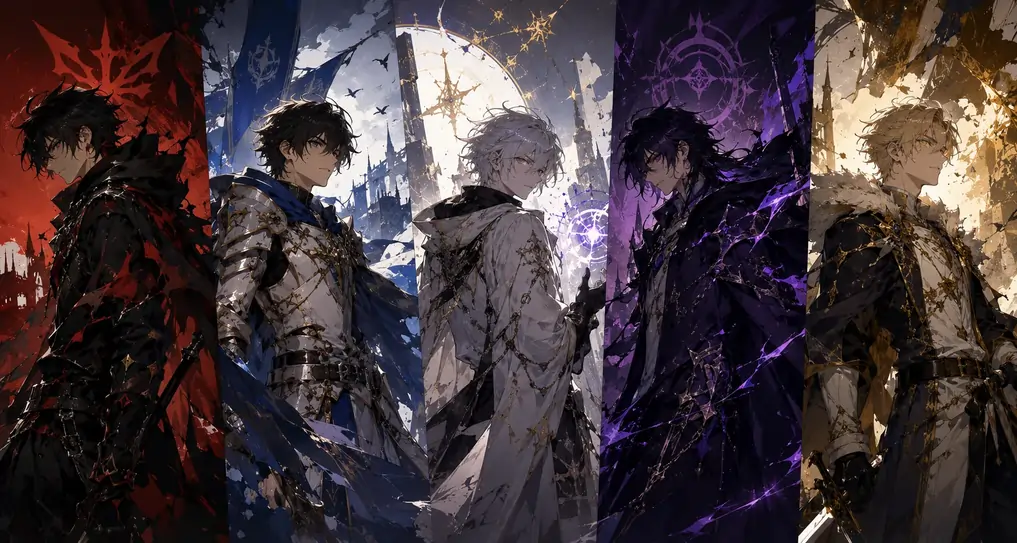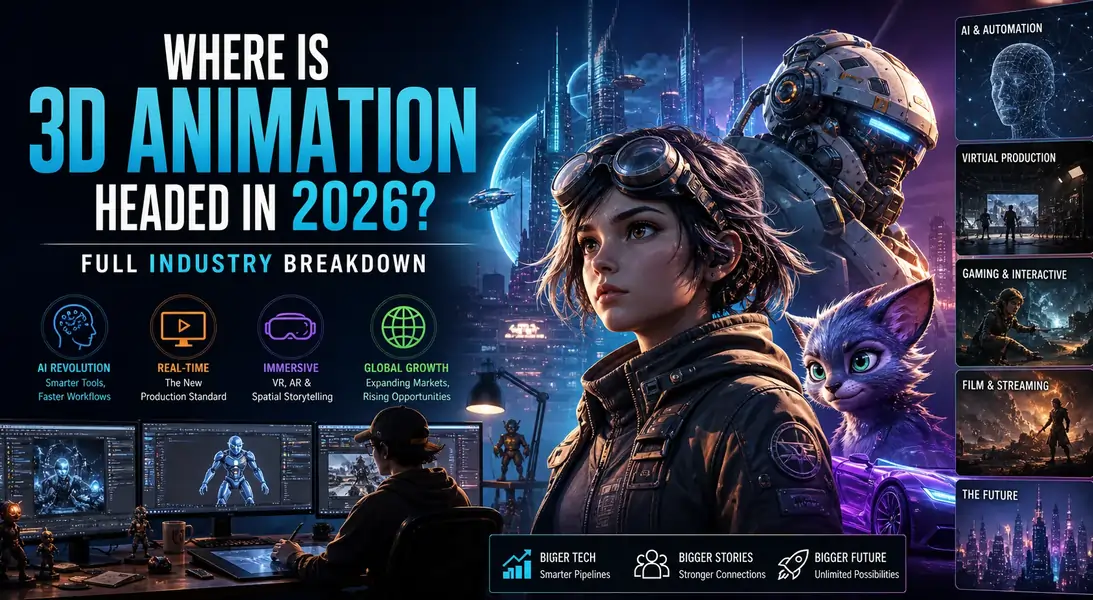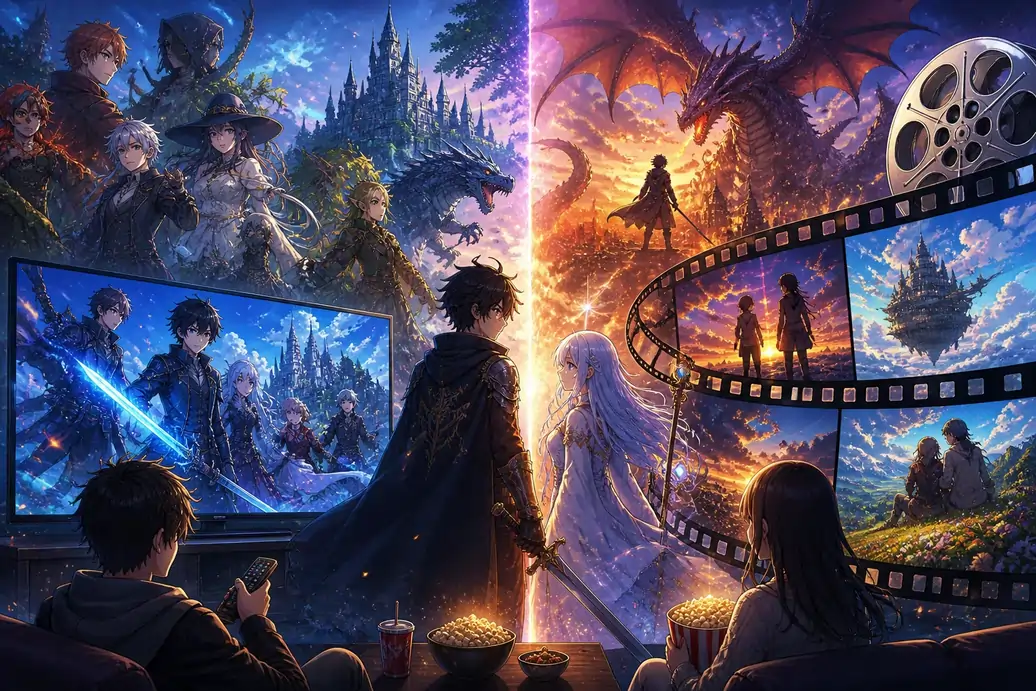
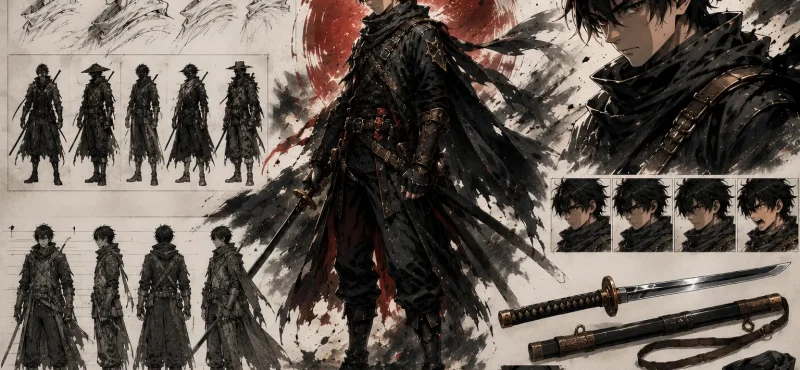
The modern entertainment industry runs on imagination. Before a hero swings a sword, before a creature roars on screen, before a cartoon character becomes a global icon, somebody sketches the first spark. That spark is called character design concept art.
It sits at the crossroads of storytelling, psychology, fashion, anatomy, cinema, gaming, branding, and pure visual instinct. A single silhouette can become a billion-dollar franchise. Think about the sharp geometry of Spider-Man, the emotional softness of Pixar characters, or the instantly recognizable chaos of anime protagonists. None of them started with final renders. They started as rough concept art sketches.
Today, the world of character design concept art is evolving faster than ever. AI tools are reshaping workflows. Real-time rendering engines are changing production pipelines. Stylized cartoons are competing with hyper-realistic digital humans. Independent artists are building audiences larger than studios. The industry feels less like a straight road and more like a neon-lit megacity expanding every night.
And that makes this the perfect time to understand where concept art came from, where it is going, and how artists can survive and thrive in the next creative revolution.
What Is Character Design Concept Art
At its core, character design concept art is the process of visually developing a character before production begins.
It is not just “drawing a cool character.”
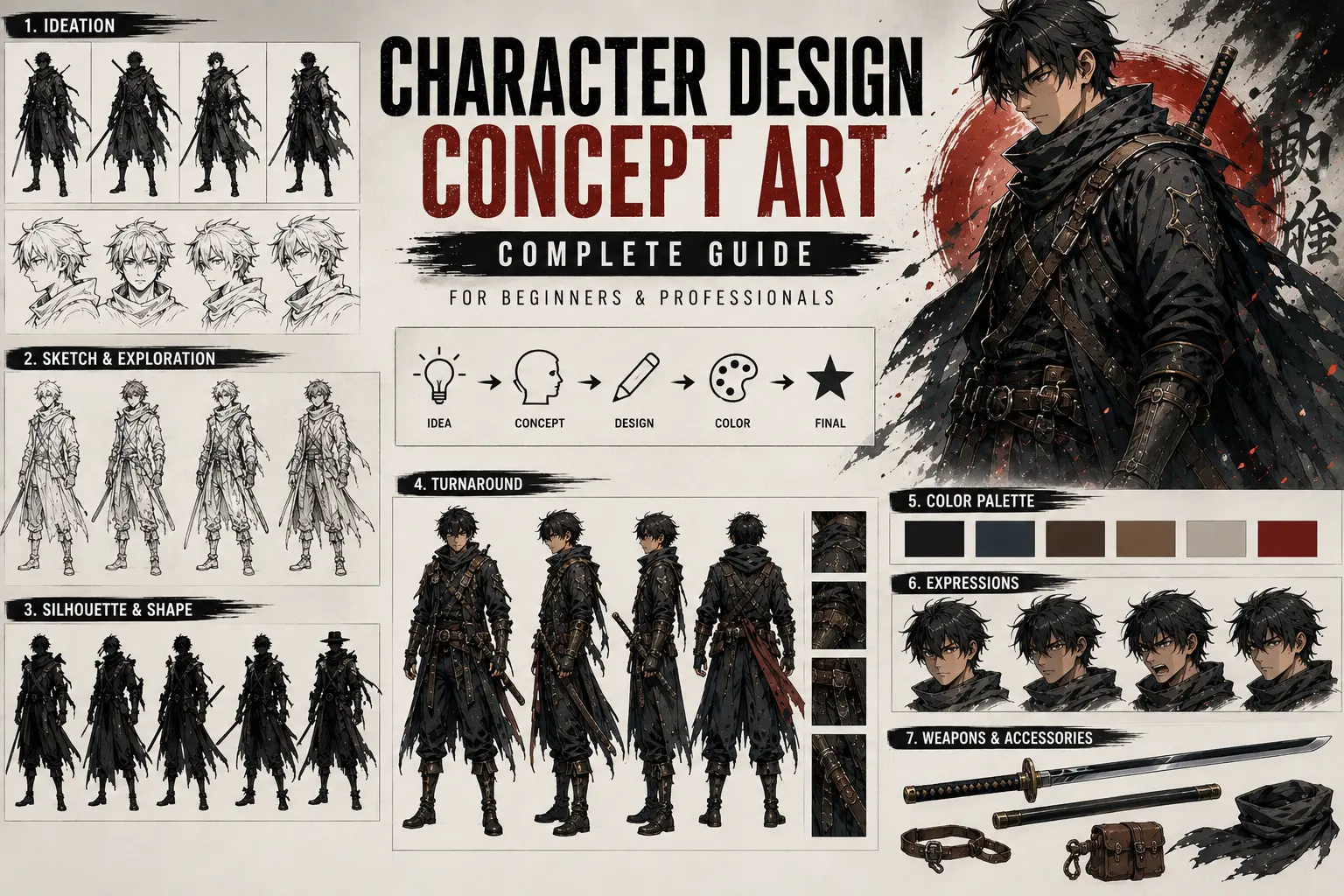
A professional concept artist designs:
- Personality
- Body language
- Costume logic
- Shape language
- Color identity
- Emotional appeal
- Cultural references
- Animation practicality
- Story relevance
A strong character design communicates information instantly. Before the character even speaks, the audience should already feel something.
A tiny robot with oversized eyes feels vulnerable.
A villain with triangular shapes feels dangerous.
A rounded cartoon panda feels approachable.
That is visual psychology working silently in the background.
Modern studios use concept art character design across:
- Animated films
- Video games
- Web series
- Comics
- Advertising
- Toys
- Mobile apps
- Virtual influencers
- Metaverse experiences
- Brand mascots
- YouTube animation channels
The demand is no longer limited to Hollywood. Streaming platforms, indie game studios, YouTube creators, and startups now require character designers constantly.
Why Character Design Matters More Than Ever
The internet is drowning in content. Attention spans move like caffeinated squirrels 🐿️⚡
Characters are what make audiences stay.
A memorable character becomes emotional glue. It creates fandoms, merchandise sales, memes, communities, and brand loyalty.
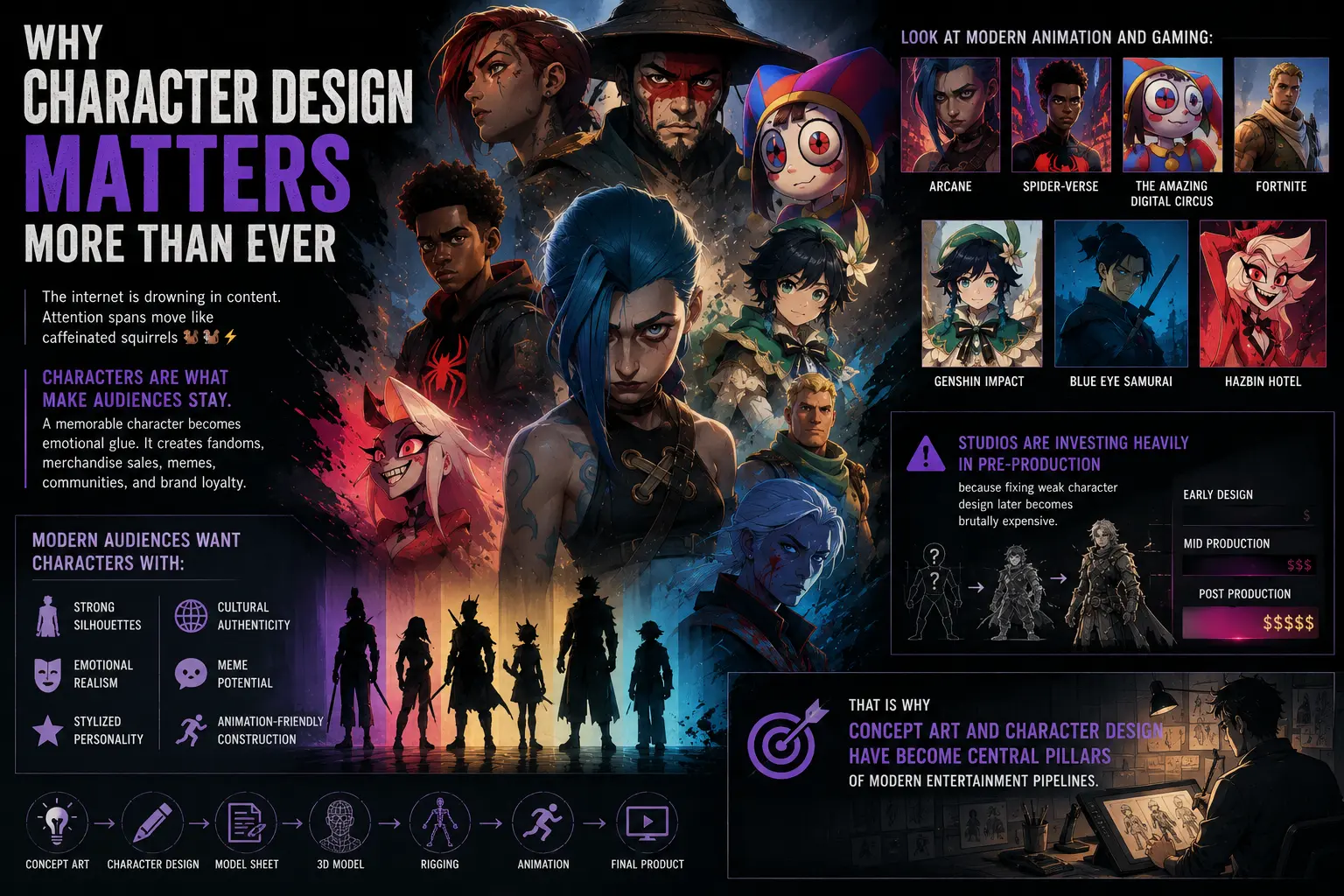
Look at modern animation and gaming:
- Arcane
- Spider Verse
- The Amazing Digital Circus
- Fortnite
- Genshin Impact
- Blue Eye Samurai
- Hazbin Hotel
These projects succeeded partly because their character designs felt recognizable within seconds.
Modern audiences want characters with:
- Strong silhouettes
- Emotional realism
- Stylized personality
- Cultural authenticity
- Meme potential
- Animation-friendly construction
Studios are investing heavily in pre-production because fixing weak character design later becomes brutally expensive.
That is why concept art and character design have become central pillars of modern entertainment pipelines.
The Evolution of Character Design Concept Art
The history of character design concept art is basically the history of human imagination evolving alongside technology.
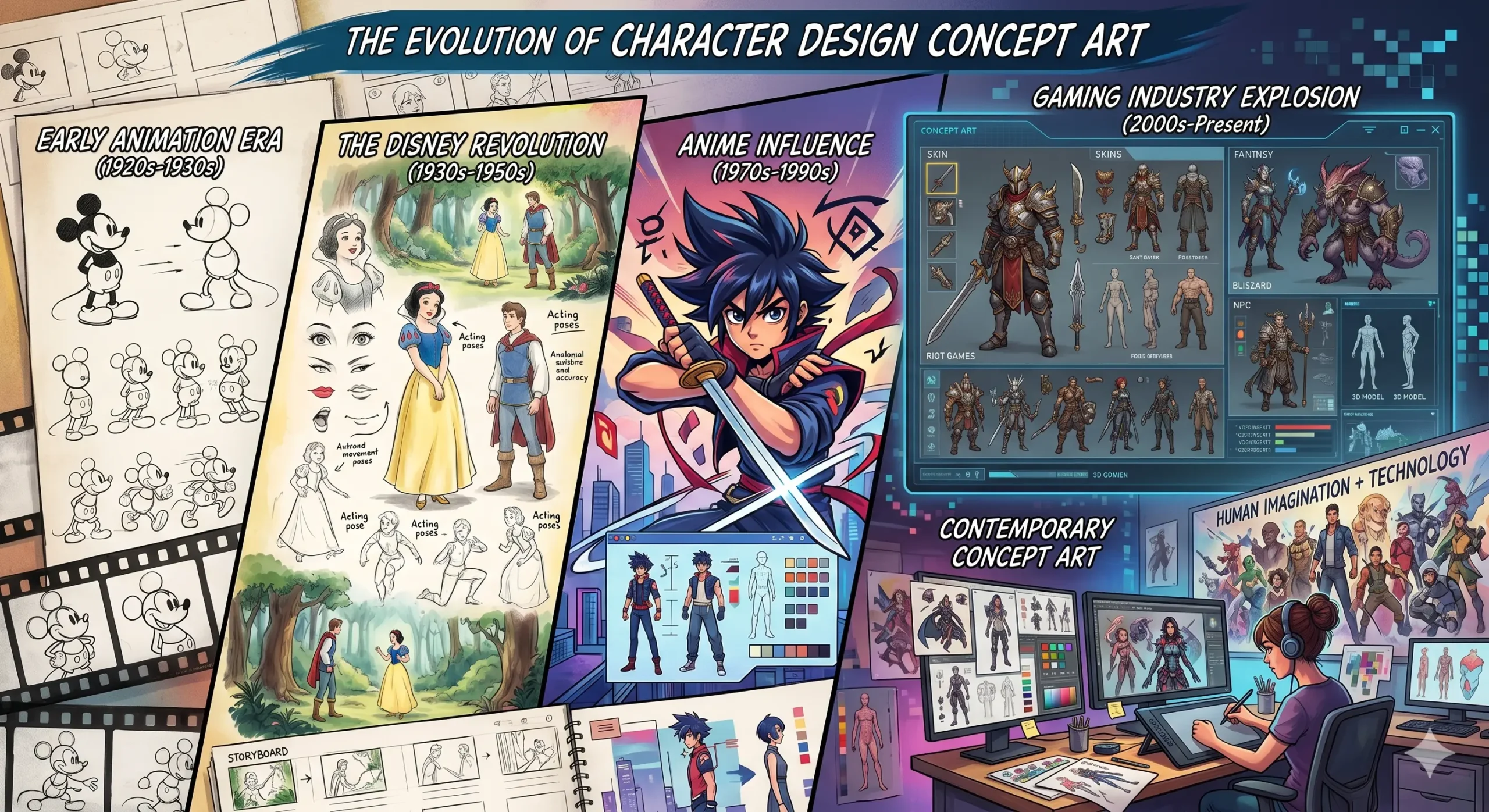
Early Animation Era
In early cartoons, character designs were simple because animation was expensive and labor intensive.
Characters like Mickey Mouse had:
- Circular shapes
- Minimal detail
- Repetitive movement systems
The goal was production efficiency.
But simplicity accidentally created iconic readability.
The Disney Revolution
Disney transformed character design into emotional engineering.
Artists studied:
- Anatomy
- Acting
- Animal movement
- Facial expressions
- Costume physics
Characters became emotionally believable instead of merely functional.
This era proved that audiences emotionally connect with design nuance.
Anime Influence
Anime changed global design philosophy completely.
Japanese studios pushed:
- Exaggerated expressions
- Symbolic hairstyles
- Stylized anatomy
- Emotional color palettes
- Cinematic framing
Anime made stylization cool worldwide.
Today, even Western concept artists borrow heavily from anime language.
Gaming Industry Explosion
Gaming accelerated concept art character design into a massive global profession.
Games required:
- Alternate costumes
- Weapon variations
- Skins
- NPC design systems
- Creature ecosystems
- Worldbuilding consistency
This created huge demand for professional concept artists.
Studios like Riot Games, Blizzard, Naughty Dog, and FromSoftware turned concept art into a prestige discipline.
The Modern Character Design Pipeline
Professional character design concept art usually follows a layered workflow.
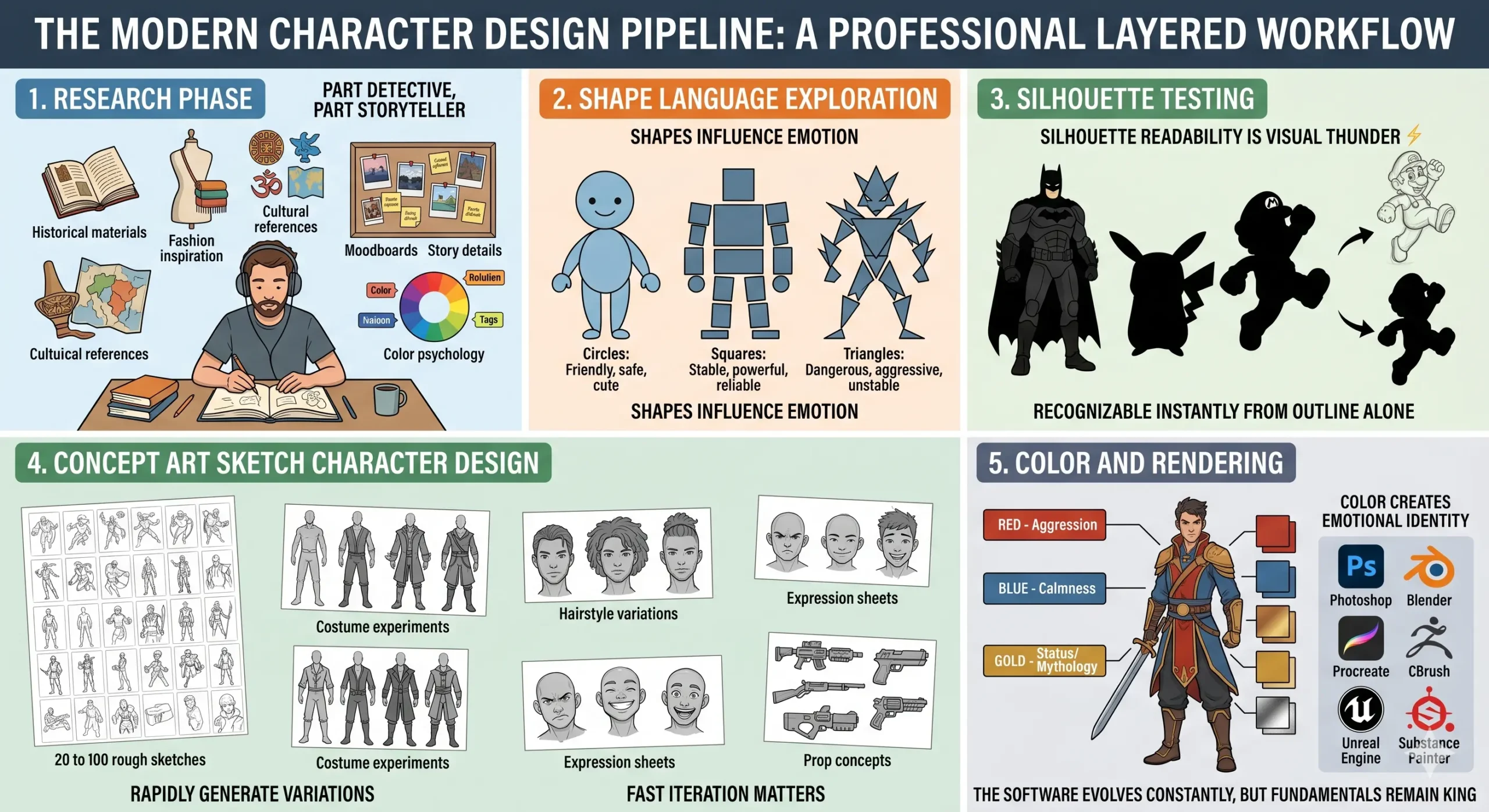
1. Research Phase
Artists gather:
- Cultural references
- Fashion inspiration
- Historical materials
- Moodboards
- Story details
- Color psychology
Good concept artists are part detective, part storyteller.
2. Shape Language Exploration
Shapes influence emotion.
| Shape | Psychological Feeling |
|---|---|
| Circles | Friendly safe cute |
| Squares | Stable powerful reliable |
| Triangles | Dangerous aggressive unstable |
This stage defines the emotional skeleton of the character.
3. Silhouette Testing
If the silhouette works in pure black, the design is usually strong.
The best characters are recognizable instantly from outline alone.
Batman. Pikachu. Mario. Naruto.
Silhouette readability is visual thunder ⚡
4. Concept Art Sketch Character Design
This is where artists rapidly generate variations.
Professional artists often create:
- 20 to 100 rough sketches
- Costume experiments
- Hairstyle variations
- Expression sheets
- Prop concepts
Fast iteration matters more than perfection.
That is why concept art sketch character design is one of the most important skills in the industry.
5. Color and Rendering
Color creates emotional identity.
Red may suggest aggression.
Blue may imply calmness.
Gold often signals status or mythology.
Modern pipelines use:
- Photoshop
- Blender
- Procreate
- ZBrush
- Unreal Engine
- Substance Painter
The software evolves constantly, but artistic fundamentals remain king.
The Rise of Stylized Art
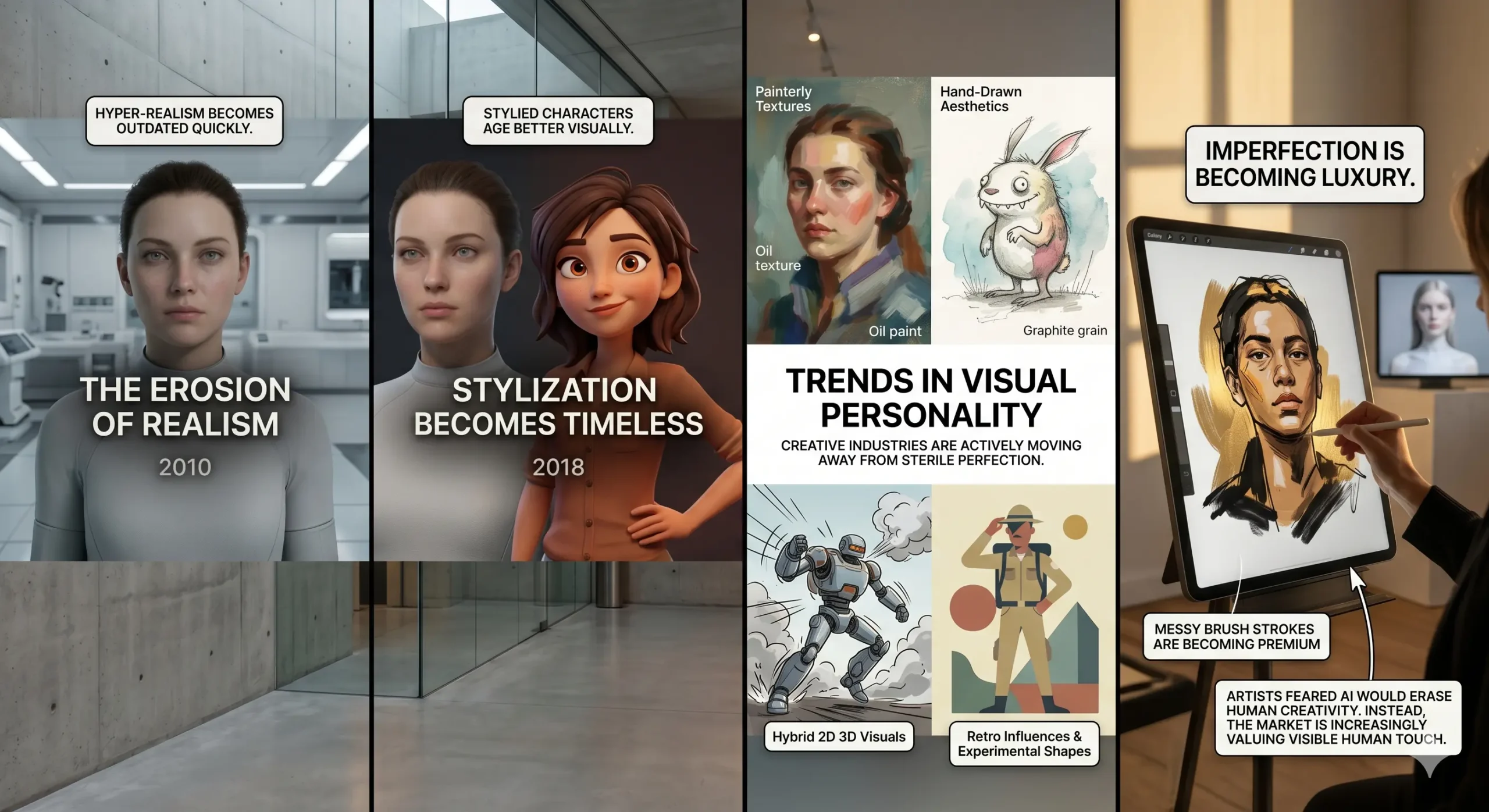
One major industry shift is the growing dominance of stylized art over pure realism.
Why?
Because stylized characters age better visually.
Hyper realism becomes outdated quickly. Stylization becomes timeless.
Recent trends show growing demand for:
- Painterly textures
- Hand drawn aesthetics
- Imperfect linework
- Hybrid 2D 3D visuals
- Retro influences
- Experimental shapes
Creative industries are actively moving away from sterile perfection. Multiple 2026 illustration trend reports highlight growing demand for handcrafted visual personality over overly polished AI aesthetics.
This is important.
Artists feared AI would erase human creativity. Instead, the market is increasingly valuing visible human touch.
Messy brush strokes are becoming premium.
Imperfection is becoming luxury.
AI and the Great Industry Earthquake
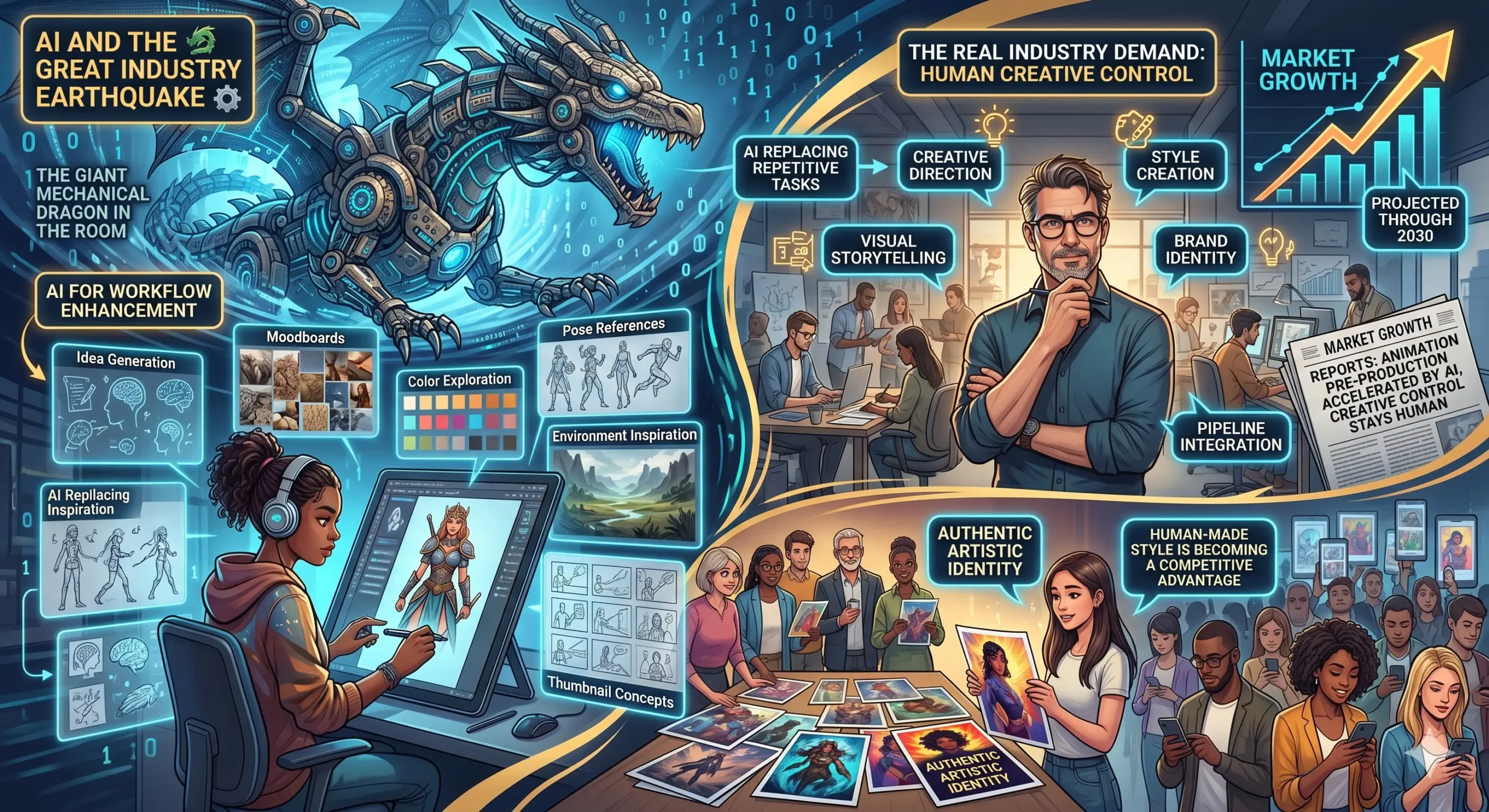
Now comes the giant mechanical dragon in the room 🐉⚙️
Artificial intelligence.
AI has completely changed the workflow of character design concept art.
Artists now use AI for:
- Idea generation
- Moodboards
- Color exploration
- Pose references
- Environment inspiration
- Thumbnail concepts
But there is an important reality many beginners misunderstand.
AI is not replacing top artists.
AI is replacing repetitive production tasks.
The real industry demand is shifting toward:
- Creative direction
- Visual storytelling
- Art supervision
- Style creation
- Brand identity
- Pipeline integration
Professional studios still need artists who can think visually.
Reports from the animation industry show AI is increasingly used to accelerate pre-production and experimentation, but creative control remains dependent on human artists.
Even the broader AI art market reflects explosive growth. The AI in Art and Creativity market is projected to grow significantly through 2030 with rapid expansion across entertainment and creative industries.
But something fascinating is happening simultaneously.
The more AI-generated images flood the internet, the more audiences crave authentic artistic identity.
Human-made style is becoming a competitive advantage.
Future of Character Design Concept Art
The next decade will reshape the industry dramatically.
Here is what is coming.
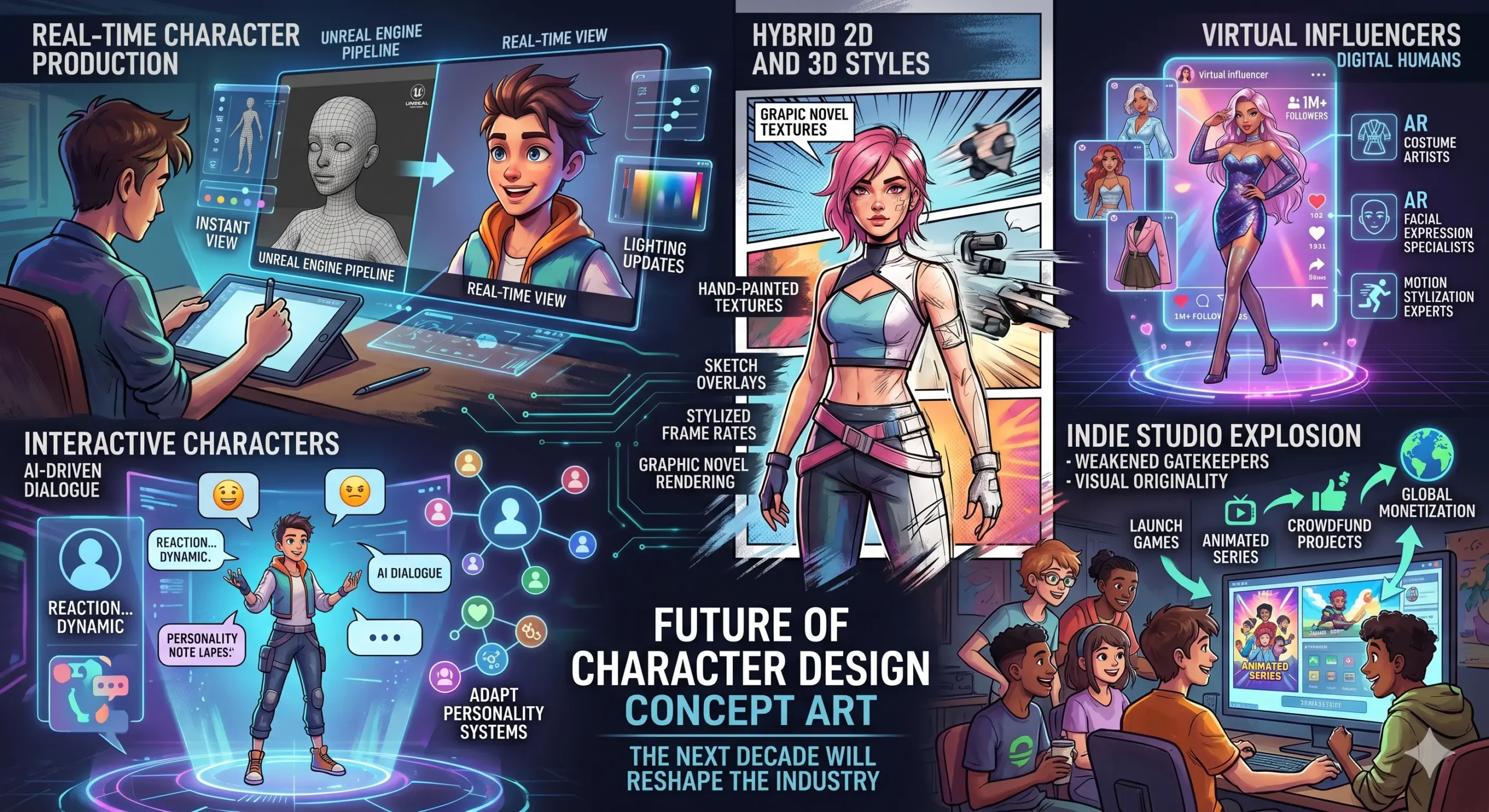
Real Time Character Production
Tools like Unreal Engine are changing pipelines completely.
Instead of waiting months for rendering:
- Artists can view characters instantly
- Lighting updates happen in real time
- Cinematic previews become interactive
This speeds up iteration massively.
Interactive Characters
Future character design will not remain static.
Characters will increasingly:
- React to users dynamically
- Use AI-driven dialogue
- Adapt personality systems
- Exist inside virtual spaces
Designers will create emotional systems, not just appearances.
Hybrid 2D and 3D Styles
The future belongs to hybrid visuals.
Projects like Spider Verse already proved audiences love mixed-media aesthetics.
Expect more:
- Hand-painted textures
- 3D bases with 2D finishes
- Sketch overlays
- Stylized frame rates
- Graphic novel rendering
The polished plastic look is fading.
Virtual Influencers and Digital Humans
Brands increasingly create digital personalities.
Some influencers are now entirely virtual.
This opens massive demand for:
- Character designers
- Costume artists
- Facial expression specialists
- Motion stylization experts
Character design is moving beyond entertainment into marketing, education, fashion, and social media branding.
Indie Studio Explosion
The gatekeepers are weakening.
A small team with strong concept art can now:
- Build animated series
- Launch games
- Create viral IPs
- Crowdfund projects
- Monetize globally
The modern internet rewards visual originality faster than ever.
How Beginners Can Enter the Industry
Many beginners think they need expensive schools.
Not true.
What matters most:
- Portfolio quality
- Consistency
- Visual thinking
- Storytelling ability
A killer portfolio beats certificates.
Focus on:
- Anatomy
- Gesture drawing
- Shape language
- Color theory
- Film analysis
- Fashion observation
- Storytelling
And most importantly:
Draw constantly.
Professional artists are basically visual athletes.
Biggest Mistakes Beginners Make
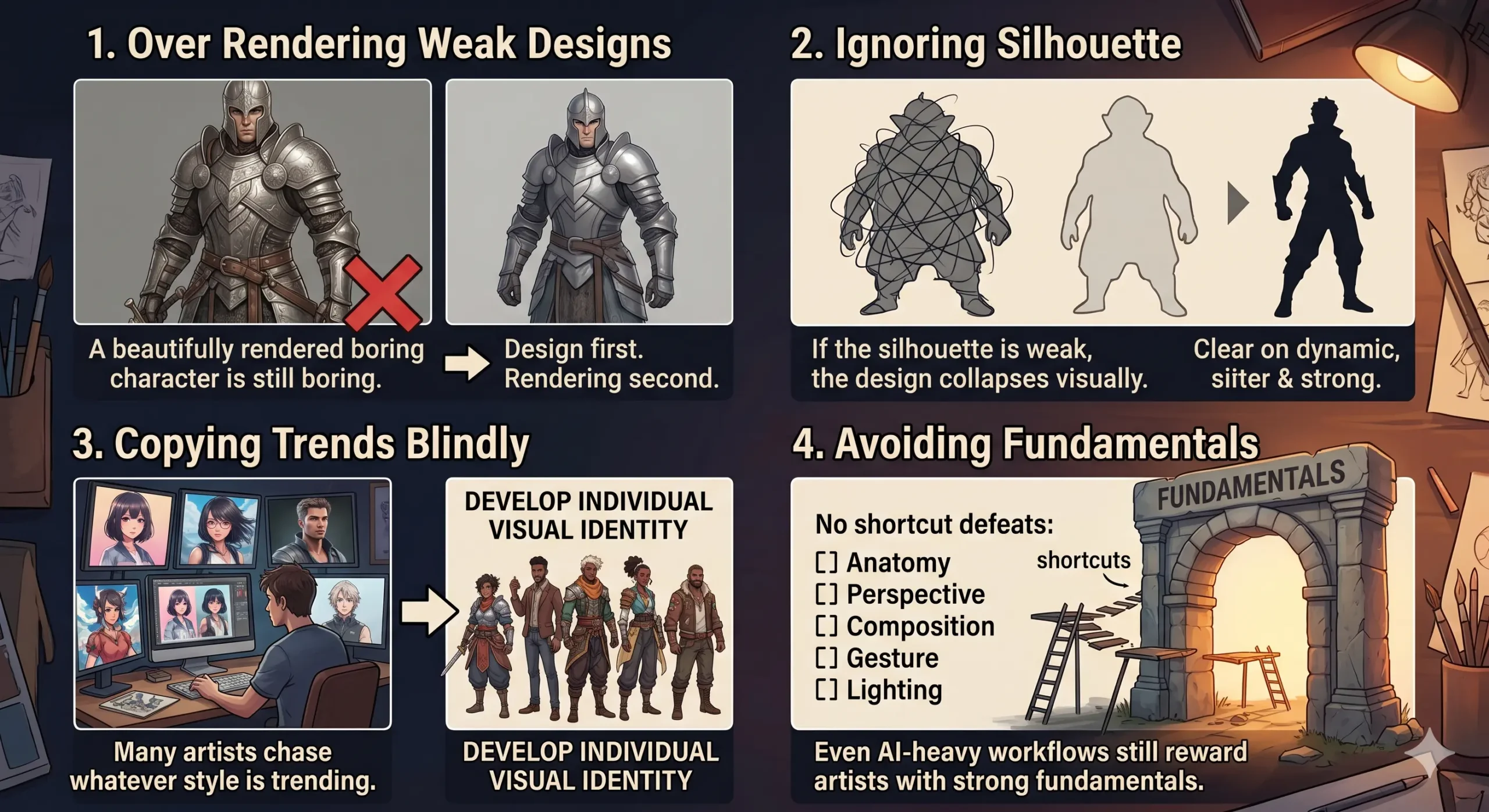
Over Rendering Weak Designs
A beautifully rendered boring character is still boring.
Design first.
Rendering second.
Ignoring Silhouette
If the silhouette is weak, the design collapses visually.
Copying Trends Blindly
Many artists chase whatever style is trending.
But industry leaders develop recognizable visual identity.
Avoiding Fundamentals
No shortcut defeats:
- Anatomy
- Perspective
- Composition
- Gesture
- Lighting
Even AI-heavy workflows still reward artists with strong fundamentals.
How to Create Strong Designs Concept Art
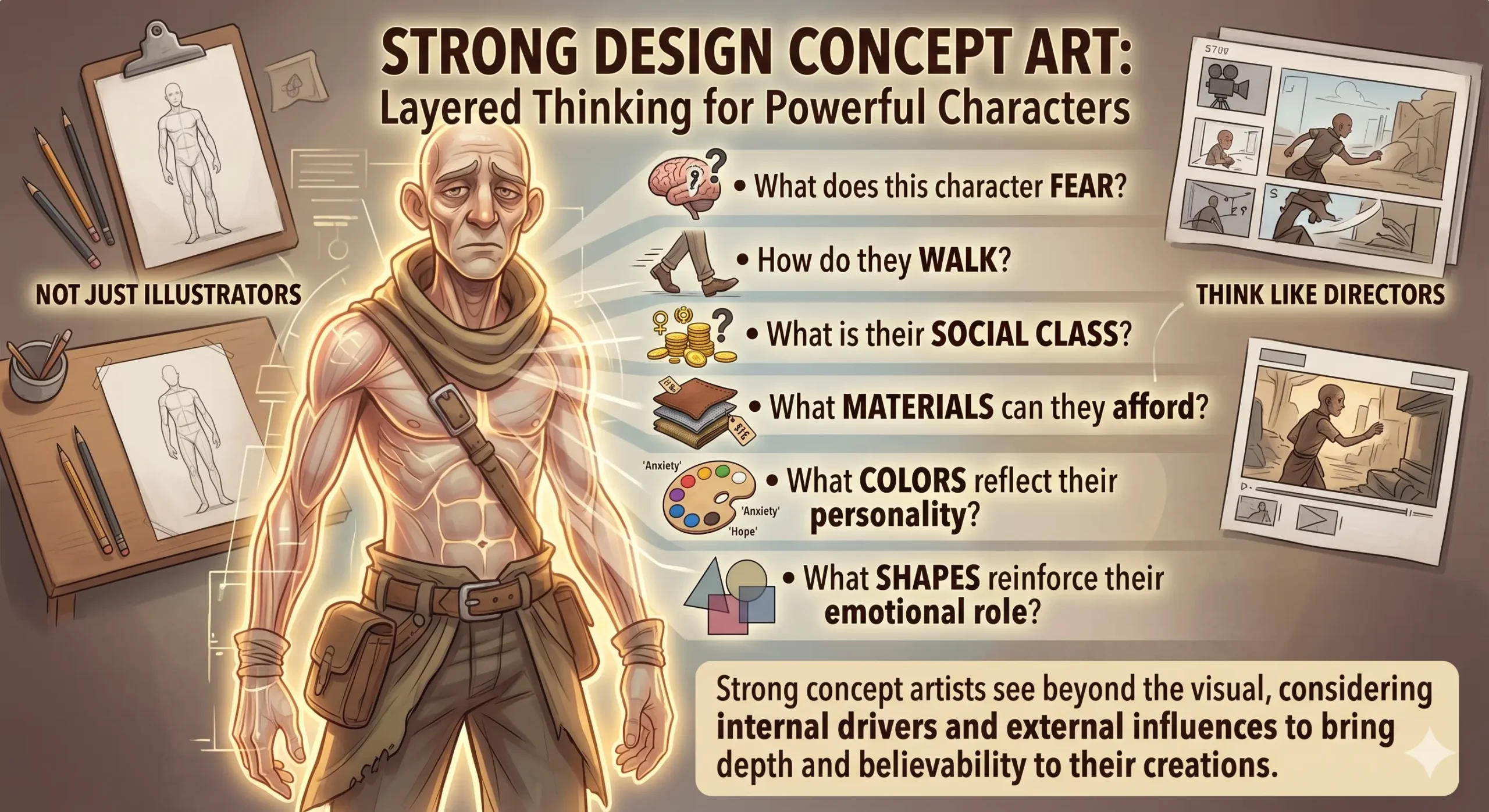
Strong character design comes from layered thinking.
Ask:
- What does this character fear?
- How do they walk?
- What is their social class?
- What materials can they afford?
- What colors reflect their personality?
- What shapes reinforce their emotional role?
The strongest concept artists think like directors.
Not just illustrators.
How to Design Character Concept Art Professionally
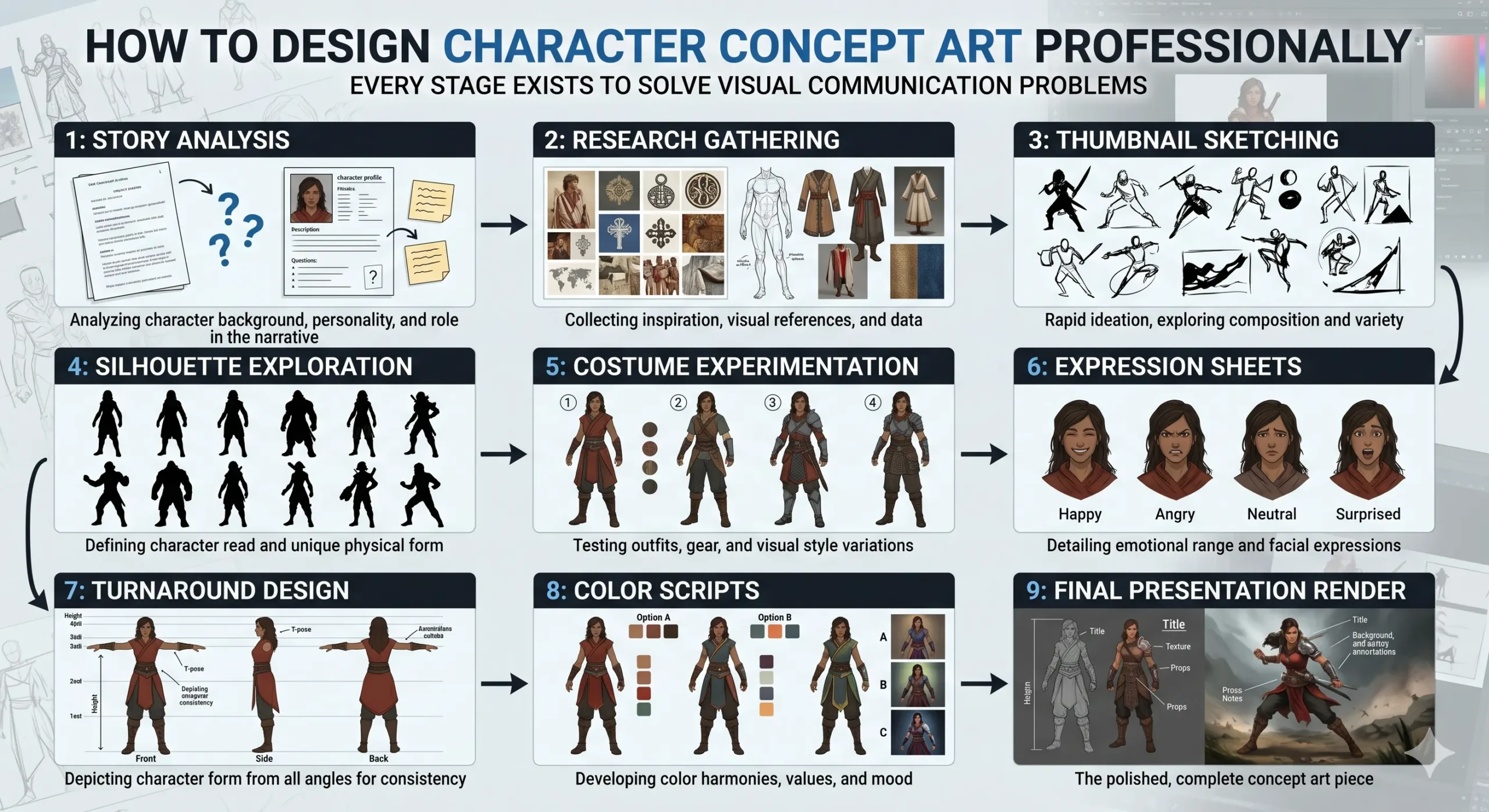
Professional workflow usually includes:
- Story analysis
- Research gathering
- Thumbnail sketching
- Silhouette exploration
- Costume experimentation
- Expression sheets
- Turnaround design
- Color scripts
- Final presentation render
Every stage exists to solve visual communication problems.
The Emotional Power of Character Design
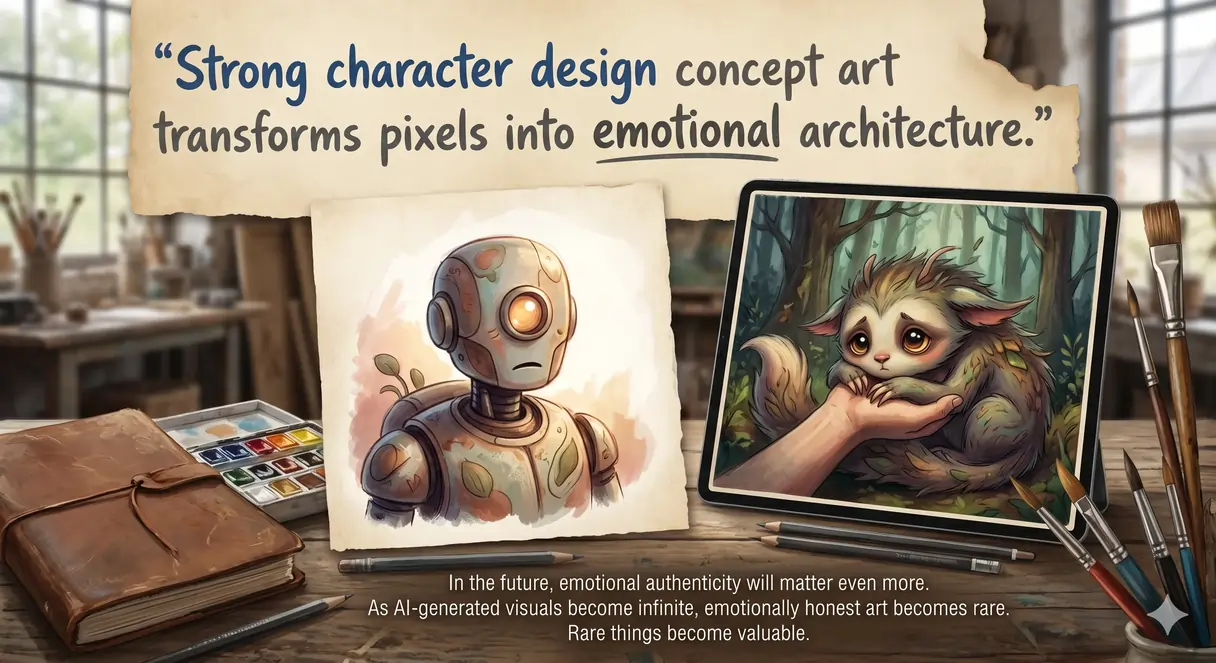
This part matters most.
People do not remember polygons.
They remember feelings.
A great character design creates emotional memory.
That is why audiences cry over animated robots, fictional creatures, and stylized cartoons.
Strong character design concept art transforms pixels into emotional architecture.
And in the future, emotional authenticity will matter even more.
Because as AI-generated visuals become infinite, emotionally honest art becomes rare.
Rare things become valuable.
Final Thoughts
The future of character design concept art is not dying. It is mutating into something larger, faster, stranger, and more exciting.
AI will change workflows.
Real-time engines will accelerate production.
Virtual worlds will demand endless characters.
Stylization will dominate modern aesthetics.
Human creativity will become more important, not less.
The artists who survive this industry revolution will not simply be people who draw well.
They will be:
- Visual storytellers
- Creative thinkers
- Style innovators
- World builders
- Emotional architects
The next legendary character might not come from a billion-dollar studio.
It might come from a small room, glowing with monitor light at 2:13 AM, where an artist opens a sketchbook and creates a silhouette the world has never seen before.
That is the real magic of concept art character design. It turns imagination into cultural memory.
FAQs for Character Design Concept Art
1. What is character design concept art
Character design concept art is the process of visually developing a character before production. It defines personality, appearance, costume, and emotional tone through sketches and iterations used in animation, games, and films.
2. What is the difference between concept art and character design
Concept art is a broader field that includes environments, props, and worlds, while character design focuses specifically on creating characters. Character design is a specialized part of concept art.
3. How to design character concept art for beginners
Start with simple shapes, study anatomy, build silhouettes, and create multiple rough sketches. Focus on storytelling and personality instead of jumping directly into detailed rendering.
4. What software is used for concept art character design
Popular tools include Photoshop, Procreate, Blender, ZBrush, and Unreal Engine. However, strong fundamentals matter more than tools.
5. Can graphic design branch into concept art
Yes, graphic designers can transition into concept art by learning drawing fundamentals, anatomy, and visual storytelling. Skills like composition and color theory are already transferable.
6. How to create strong designs in concept art
Strong designs come from clear silhouettes, strong shape language, and a deep understanding of character personality. Every design choice should support the story.
7. What skills are required for concept art sketch character design
Key skills include sketching speed, anatomy, perspective, color theory, and creativity. The ability to generate multiple ideas quickly is essential.
8. Is concept art a good career in 2026 and beyond
Yes, demand is growing across animation, gaming, advertising, and digital content. With AI tools evolving, creative direction and original thinking are becoming even more valuable.