
Hours spent browsing furniture websites. Hundreds of Pinterest boards saved. Yet somehow, nothing clicks when you try to picture it in your actual space. That stunning table from the catalog will it really work with the chairs you love and the wall color you just painted?
Here’s what nobody tells you upfront: finding a dining table set that genuinely complements your dining room decor has nothing to do with blind luck or paying someone thousands for design advice. It comes down to grasping some straightforward principles about how materials, colors, and styles interact to create spaces that feel deliberate. This guide gives you a working framework that removes the mystery from this choice.
Material Selection for Perfect Matches
With your style nailed down, materials become your secret weapon for coordination. The finishes you select will either unify your dining area or leave it feeling disconnected.
Beyond Wood Options
Glass isn’t your sole substitute for solid timber. Sintered stone surfaces resist both heat and scratches while injecting contemporary character into minimalist or industrial environments. Metal frames perform exceptionally when bridging different areas in open-concept layouts—they function as neutrals and permit more freedom when mixing wood chair finishes.
Just verify that any metal in your dining setup coordinates with lighting fixtures and hardware throughout to establish visual continuity.
Mixed materials deliver flexibility without demanding perfect matches everywhere.
Wood Tones That Work Together
Is everything matching precisely? That’s actually dull. Follow the 2-3 tone rule instead: limit yourself to two or three wood finishes across your dining space, ensuring they share comparable undertones. Warm honey oak harmonizes wonderfully with walnut, but crashes spectacularly against cool grey ash. Got warm wood floors? Maintain that warmth in your table or seating.
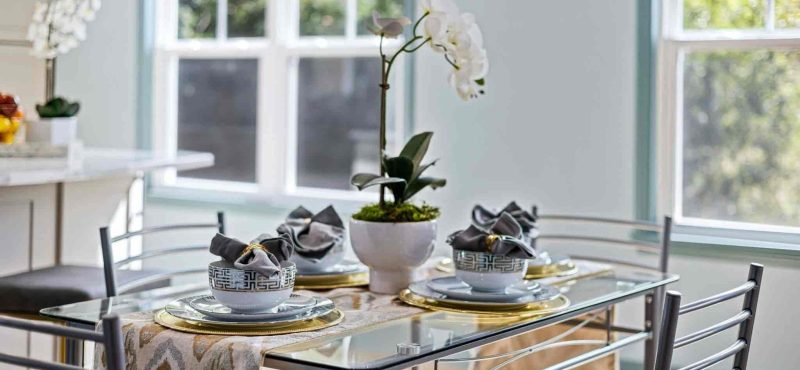
Living in a compact modern apartment where space comes at a premium? Consider selecting a glass dining table set for 4 to tackle multiple challenges simultaneously by maintaining open sightlines while complementing virtually any wood tone in surrounding pieces.
Decode Your Decor Style Before Shopping
Stop right there before you hit that checkout button. You need clarity about what already exists in your space. Your home is already telling a design story, whether you’ve been paying attention or not.
Identify Your Dominant Aesthetic
Take a real look at your dining area this second. What catches your eye? Spaces with modern sensibilities typically showcase crisp lines and stripped-down details, whereas farmhouse environments embrace natural timber and inviting textures.
Recent consumer research reveals that 46 percent of people most commonly describe their style as minimalist, explaining the dominance of streamlined, uncluttered dining set ideas in retail spaces. Your space mixes various influences? Relax—52 percent of consumers prefer to vary their style by room, meaning you’ve got plenty of company when blending different elements.
What matters most? Spotting your common thread. Gather photos of spaces in your home that make you happiest and search for recurring themes in wood colors, metal treatments, or fabric choices.
Why Style-First Shopping Matters
Shopping without a defined style direction lands you with gorgeous individual items that fight each other visually. That stunning mid-century table? It’ll clash horribly with those heavy, elaborate chairs from a traditional collection.
Beginning with your style profile protects you from costly returns and the ongoing frustration of rooms that perpetually feel “off.” Consider it like building a capsule wardrobe for your space every piece should play nicely together even when sourced from different vendors.
You’ll waste less time questioning yourself and gain more time actually enjoying dinners in a room that feels genuinely complete.
Master Color Coordination Strategies
Color appears straightforward until you realize it’s where most folks stumble when figuring out how to choose dining table elements that harmonize.
The 60-30-10 Rule for Dining Spaces
Professional designers lean on this ratio religiously: 60% dominant color (typically walls and flooring), 30% secondary color (substantial furniture like your dining table), and 10% accent color (seating, cushions, accessories). Your dining table usually occupies that 30% slot, meaning it should enhance your walls without disappearing into them. Beige walls with dark floors? A medium wood tone builds the ideal connection between those extremes.
This formula prevents the “everything’s too matchy” trap while maintaining room balance.
Matching Undertones Like a Pro
Here’s what trips up most people: undertones outweigh the surface color. That “grey” chair might carry blue, brown, or purple undertones that completely transform how it interacts with your table. Place paint chips or fabric samples against your existing furniture in daylight—you’ll immediately spot whether undertones cooperate or conflict.
Cool undertones (blues, greys, purples) appear jarring beside warm undertones (reds, oranges, yellows), even when the primary colors seem compatible initially.
Always test in your actual environment before making major purchases.
Strategic Chair Pairing for a Cohesive Look
Chairs represent nearly half your dining set’s visual presence, making them critical for achieving matching dining tables and chairs that appear purposeful.
Upholstery Coordination Tips
Extract colors from other room elements for chair fabric your window treatments, floor rug, or displayed artwork.
This builds visual bridges that make spaces feel intentional rather than haphazard. Statement table with remarkable grain patterns or distinctive legs? Keep chairs understated with solid fabrics. Basic table instead? Patterned or textured chair upholstery introduces character. Modern performance fabrics now deliver high-end appearances while fighting stains and daily wear.
Upholstery decisions impact both aesthetic appeal and ongoing maintenance requirements.
Budget-Conscious Strategies That Work
Building a cohesive appearance doesn’t demand bottomless resources just intelligent budget distribution.
Where to Splurge vs Save
Put your money into the table since it endures the hardest use and establishes the foundation for everything else. Economize on chairs by blending vintage discoveries with affordable new options, or selecting simpler designs you’ll personalize later.
Quality solid wood tables outlive cheaper particle board alternatives by literal decades, justifying the initial investment. Chairs are simpler to refresh down the road when your taste shifts or finances allow upgrades.
This strategy lets you begin now without abandoning your long-term vision.
DIY Customization Ideas
Refinishing existing chairs to complement a new table costs pennies compared to replacing everything. Paint chair frames, reupholster seats, or change hardware to connect pieces. Even straightforward modifications like adding coordinating fabric cushions can transform mismatched chairs into an intentional collection.
Stream a few online tutorials—most projects need minimal tools and experience but produce substantial visual results for your dining room decor.
Small customizations unlock designer appearances on reasonable budgets.
Quick Style-to-Material Guide
| Decor Style | Best Table Materials | Ideal Chair Options | Key Finish Notes |
| Modern Minimalist | Glass, light oak, white lacquer | Metal, molded plastic, leather | Keep finishes matte or satin |
| Farmhouse | Pine, reclaimed wood, oak | Painted wood, rush seats | Distressed or natural finishes |
| Industrial | Metal bases + wood tops | Metal, wood with metal accents | Dark stains, raw metal |
| Coastal | Whitewashed wood, glass | Wicker, painted wood, slipcovered | Light, weathered finishes |
| Mid-Century | Walnut, teak | Upholstered, bentwood | Warm wood tones, clean lines |
| Transitional | Oak, maple | Mix of upholstered and wood | Medium stains, neutral fabrics |
Questions About Matching Your Dining Set
Can I mix different wood finishes in my dining room?
Absolutely, yes. Apply the 2-3 tone rule and commit to either exclusively warm or exclusively cool undertones. Coordinating undertones trumps matching exact finishes. Deliberate variation reads as sophisticated while identical matching can appear flat and showroom-sterile.
Should my dining table match my kitchen cabinets?
Not required. In open-concept layouts, your dining set can function as a transitional element between zones. Coordinate undertones and incorporate one shared component like hardware finish or accent color instead of attempting to match everything precisely, which frequently backfires aesthetically.
How do I test if a dining set will match before buying?
Request finish samples and fabric swatches to examine in your actual space. Apply painter’s tape to outline the table dimensions on your floor. Photograph samples beside your current furniture under various lighting conditions. Many retailers provide generous return policies specifically for this scenario.
Final Thoughts on Creating Your Cohesive Dining Space
Selecting a dining set that harmonizes with your decor ultimately requires understanding your established style, coordinating materials and undertones, and making strategic budget decisions. Perfect matches across the board aren’t necessary thoughtful coordination that produces visual harmony is what counts.
Begin by pinpointing your dominant style, then choose materials and finish sharing undertones with your current environment. Keep in mind that comfort deserves equal weight with aesthetics, particularly for chairs you’ll use regularly. Armed with these principles, you can confidently build a dining area that feels both cohesive and genuinely yours, requiring neither professional design services nor unlimited resources.
Homeowners who struggle to visualize how furniture will look together often turn to digital design and visualization experts like Incredimate to bridge the gap between inspiration boards and real-world spaces.